Tuesday, 16 June 2015

Sun, Sand and Surf in Floripa

Soft white sand beaches, some of the best surfing spots in the world, green rolling hills, sparkling lagoons, a historical city centre with colourful old buildings and a vibrant market, lively beach bars and cafés, fresh oysters cultivated just off the island and enough seafood restaurants to satisfy any gastronomy lover. Voted as the best place to live in Brazil with a high quality of life, what’s not to love about Florianopolis?


A view over Lagoon Conceição


Soft white sand dunes


Affectionately known as Floripa, Florianopolis is the capital city of Santa Catarina state in Southern Brazil. The city is divided in two: the industrial sector is situated on the mainland while the historic city centre and beach resorts reside across the bay on the island of Santa Catarina. Three bridges link the two with an old suspension bridge being the most picturesque and iconic of the city skyline even though it is no longer open to traffic. 

The city centre on the west side of the island comfortably juxtapositions a growing and modern city with its efficient three lane highway, high rise apartments blocks and multiple shopping malls with an old city centre with its 16th century colonial fortresses, markets and parks. The northern part of the island is full of popular beach resorts that get crammed with visitors enjoying the perfect beaches and flatter swimming conditions in the summer months while the eastern part of the island is characterised by quaint pousadas, the best beaches for surfing and many seafood restaurants. The southern part of the island combines charming fishing villages with picturesque beaches and since the late 1980’s, successful oyster farming initiatives. A 5 day long weekend in the middle of ‘winter’ was the perfect opportunity to explore Florianopolis.


Mercado Público in the old city centre


Florianopolis Cathedreal


Old colourful buildings in the city centre


Gorgeous tree in a city park 


Sunset over the ocean from a city promenade


Floripa is about 1500 km South of where we live but since Vitoria is relatively poorly connected, it took two flights with a combined flying time of about 2 hours to reach our destination. Since the island is quite large, we rented a car to be independent of taxis and busses. Our pousada was located on the eastern side of the island right next to the Tamar Project in Barra da Lagoa with direct access to Praia Barra da Lagoa. Every morning we enjoyed a sunrise walk on the beach followed by breakfast in our room. Most of the day was spent exploring different parts of the island with a big late seafood lunch inbetween and a sunset walk on different beaches. Our evenings were chilled with coffee dates and reading books to recover from a day in the sun.


Praia Barro do Lagoa


Sunrise walks on the beach! 


The river mouth at Praia Barro do Lagoa 


Looking for that elusive perfect pansy shell 


The afternoon we arrived we found lunch on the edges of Lagoon Conceição in the form of an eat all you want seafood buffet at O Querida. It was a good deal! After lunch we took a drive and found ourselves in town walking on the promenade watching the sun go down and the lights of the city come on. On Friday we returned to the city centre to explore the Mercado Público and enjoyed a walk through the narrow colourful streets discovering the park, the cathedral and other interesting old buildings. The rest of the day was spent exploring the northern section of the island with mango and ginger salmon for lunch at Garra Azul (The Blue Claw) on the beach at Ponta das Canas followed by a sunset walk on Praia Brava, one of our favourite beaches of the trip.


The beach at Ponta das Canas


Lunch at Garra Azul


Salmon with Mango and Ginger, yummy! 

Boibs at Praia Brava


Proof that we once had a flip flop tan! 


Various sunset pics


Saturday’s exploring started at the Tamar Project next to our Pousada. Tamar is a successful non-profit organisation concerned with sea turtle conservation and the rehabilitation of sea turtle populations on the coastline of Brazil. The Tamar base in Florianopolis is the most southern base in Brazil and is much bigger than the one in Vitoria that we visited previously. They have more turtles here and much bigger pools for them. The turtles seemed particularly active when we visited and we really enjoyed a morning of turtle gazing, especially when they come up to breathe.


Visiting Tamar!


Loggerhead turtles (25 - 30 years old) coming up for air


After Tamar we took a drive to the small fishing village of Ribeirão da Ilha in the south western part of the island. This section of the island is known for oyster farming and its many oyster restaurants. Started in the late 1980’s, oyster farming has brought stability and prosperity to many local fishermen. Some oyster farmers have opened their own restaurants from where to sell their produce while others sell their oysters to local companies for further distribution to Rio and São Paulo.

We visited one of the local favourite oyster restaurants for lunch. With a pier jutting out into the ocean, Ostradamus is the perfect setting to enjoy juicy oysters. With a large variety of preparation methods on offer as well as other seafood options, it was tough choosing what to try. We eventually settled on 4 dishes covering the various oyster cooking methods: the raw ceviche style with red onions and lime juice, baked with blue cheese and pear, poached with ginger and cognac, and poached with martini. The presentation of the dishes was original and beautiful and the oysters themselves deliciously plump and succulent. We really enjoyed trying the different styles but Bron definitely preferred the cooked oysters to the raw ones!


Quaint streets of Ribeirão da Ilha 


The best place for oysters


Oysters! 
With cognac and ginger


We tried to find a beach for sunset but were too late after an extended lunch. We were a bit sad to miss out on the beautiful beaches on the south eastern end of the island but the traffic made moving around a challenge. It would typically take an hour just to do 20 km! The traffic can be attributed to a city that has outgrown its road infrastructure, many trucks and busses on the road, impolite driving and it being a long weekend. If the traffic was this bad on a long weekend in winter, I can only imagine what peak summer season must look like!


Pre-sunset at Ribeirão da Ilha looking out onto oyster baskets


On Sunday morning we enjoyed a lovely long walk covering the length of the popular surfing and party beach Praia Mole and adjacent (unknown to us, nudist beach) Praia Galheta. Nudist part aside, Praia Mole and Galheta were 2 of our favourite Floripa beaches. Sunday was the hottest day of the weekend and perfect to spend the day on the beach. We were super blessed with gorgeous hot sunny days all weekend. Floripa can be very rainy, indeed the 2 weeks before our trip was just bucketing. We felt extremely lucky to have 5 glorious days. Lunch saw us back at Lagoon Conceição for sole with prawns, capers and mushrooms done in butter at a restaurant called O Barba Negra (Black Beard). Too delicious! Afterwards we returned to 'our  beach' for some lazing before sunset.


View between Praia Mole and Praia Galheta


Praia Galheta


Friendly crab 


Relaxing end to a hot sunny day


More sunset pics


And then it was Monday and time to head back to Vitoria =( But first, an extra-long sunrise walk on the beach looking for that perfect pansy shell.

Thank you Floripa for a wonderful weekend!

This was our last Brazilian and South American getaway for now. After 2 years we are leaving Brazil. We will be enjoying a much deserved long holiday for the month of July road tripping our way through South Africa. And then  it’s on to the next as yet unconfirmed destination. Vote here for where you would like to see the boibs and the clog blog go next!

Details coming soon, watch this space! 

Thursday, 16 April 2015

Staring into the Devil's Throat

Listed as one of the 7 New Natural Wonders of the world with 275 waterfalls over almost 3 km, how could we not visit Iguassu while in South America? Our opportunity finally arose over the Easter weekend.


The mighty Iguassu Falls 


Iguassu Falls (also known as Iguaçu in Portuguese and Iguazú in Spanish) lies on the Iguassu River in the Southern Brazilian state of Paraná on the border with Argentina. Legend has it that a love scorned deity sliced the river creating the waterfalls and sentencing the lovers who escaped in a boat to fall for eternity. Science has it that a volcanic eruption caused the split in the basaltic cap that spans the border between Brazil and Argentina resulting in the waterfalls. Iguassu, meaning ‘big water’ in the local Guarani language, is an apt name since at the point of the falls the river is 2.7 km wide and the normal volume is 1750 cubic meters of water per second. That is a lot of water to be gushing over heights of between 60 and 82 metres.  

The falls themselves make a hairpin shape extending down longer on one side. Often considered the most impressive section of the falls, the mighty Devil’s Throat is at the u-part of the hairpin. The Iguassu River forms the border between Argentina and Brazil with most of the waterfalls falling on the Argentinian side. Both countries have formed national parks around the falls to protect this natural wonder and the remnants of the Atlantic Forest that surround it. Visitors flock to the falls from the towns of Puerto Iguazú on the Argentinian side and Foz do Iguaçu on the Brazilian side. Neither town is especially remarkable, simply a gateway to the national parks and the falls. 


Views of the u-shaped Devil's Throat from the Argentine side (top)
and Brazilian side (bottom)


 Looking from the top down into Devil's Throat 


We visited both national parks and were really glad we made the effort to do so. We found the two sides to be quite different but equally spectacular; in our opinion it is not really possible to say one side is better than the other. Since most of the falls are on the Argentinian side, it is easier to get up close to some sections of the falls in Argentina, however, there is no overall view of the falls from this side. The Brazilian side has spectacular panoramic views of the falls but the area near Devil’s Throat is the only section of waterfalls that one can get close to. Both parks have access to the Devil’s Throat; Argentina has a boardwalk across the upper part of the river for views down the top of falls and Brazil has a similar boardwalk halfway across the lower part of the river for views up from the bottom of Devil’s Throat and for views of the falls on either side of Devil’s Throat.


Views of various other sections of the falls from the Argentine side.
They all have names but we are not sure what they are....


This one we know is called Salto Do Hermanas


The Argentine Park felt more spread out than the Brazilian Park, there are more trails to reach different parts of the falls and we enjoyed a day of walking in the forest. We started our exploring with the trail to Devil’s Throat; it was lovely to walk out across the river into the middle of the falls on this trail. But it was also scary to think of the heavy rains in 1982 and 1992 that elevated the river to 39 000 cubic meters of water per second and washed the boardwalks and some islands away. We also enjoyed views of the falls from different angles on the Upper and Lower Trails.

We spent the day in Argentina with Frans and Agnes, our Dutch friends from Vitoria. We independently booked a weekend away in Foz but decided to spend some time together when we discovered we would be there at the same time. At the end of the day our driver also took us to the tri-border point where Argentina, Brazil and Paraguay meet.


Justin, Bron, Agnes and Frans on the lower trail on the Argentine side 


So many cool butterflies!! 
They don't really sit still for photos though.


Where we wished we were staying, the hotel in the Brazilian National Park. 


While it is easy to spend a full day or more in the Argentine Park, you only need half a day to see the main sights in the Brazilian Park. There is one main trail along the edge of the river with just incredible panoramic views of the falls across the river. There are other trails leading through the forest that one can enjoy as well though. We started at the first view point on the main falls trail and walked our way up to the grand finale of Devil’s Throat. It was just spectacular. All the information we had gathered and read about the falls does not properly describe or prepare you for the majesty that is Iguassu Falls. They are truly spectacular and so difficult to describe in words, we hope the pictures do better justice. We feel really fortunate for the opportunity to visit and see them.


First views in the Brazilian Park


More amazing views on the trail to Devil's Throat


The board walk leading to views of Devil's Throat


So much of Spray!
Standing on the boardwalk looking into the Devil's Throat.


Rainbow! 


Standing on a platform above looking down over the falls


Even though both parks are set in the forest we didn’t see a lot of animals. This could be due to how busy the parks were since it was Easter weekend. We were happy that the Brazilian Park felt much quieter on Easter Sunday than the Argentine Park had on the Saturday. We did see one group of capuchin monkeys in the Argentine Park though, and lots of pretty butterflies and loads of coatis in both parks. Sadly the coatis in both parks have become used to the human presence and see humans as a source of food. While they are not tame, they no longer feel threatened by us. Some of the coatis actively look for bags of any kind and those near the restaurant and snack areas are decidedly chubbier than the average coati. However, most of them will leave you alone if you ignore them. Apparently it is possible to see howler monkeys, capuchin monkeys, caiman, raccoons, snakes, various birds and butterflies, jaguars and other animals in the parks.  


Cheeky but cute scavenging coatis


Near the entrance of the Brazilian Iguassu National Park is the Parque das Aves, or Bird Park.
At 16.5 hectares, this is the largest bird park in Latin America. The bird park is a rescue centre and sanctuary for abused, illegally owned and trafficked birds as well as a research centre. They give a good home to birds no other institute will take. In addition to the bird hospital, they also run conservation and breeding projects for various species including toucans, macaws, and other endangered parrots. There is also a reptile section and a butterfly aviary.

We really enjoyed the afternoon we spent walking around the bird park. They have so many different species; you would spend a lifetime trying to see them all in the wild. It is obvious they are passionate about birds and that the birds here are well cared for, the aviaries are all spacious and clean and the birds seem happy. Our favourite was the toucans and the walk-in Macaw aviary. We spent ages in the Macaw aviary enjoying them swooshing around us, they really are impressive birds, it is so sad they are so endangered.


Toco Toucan


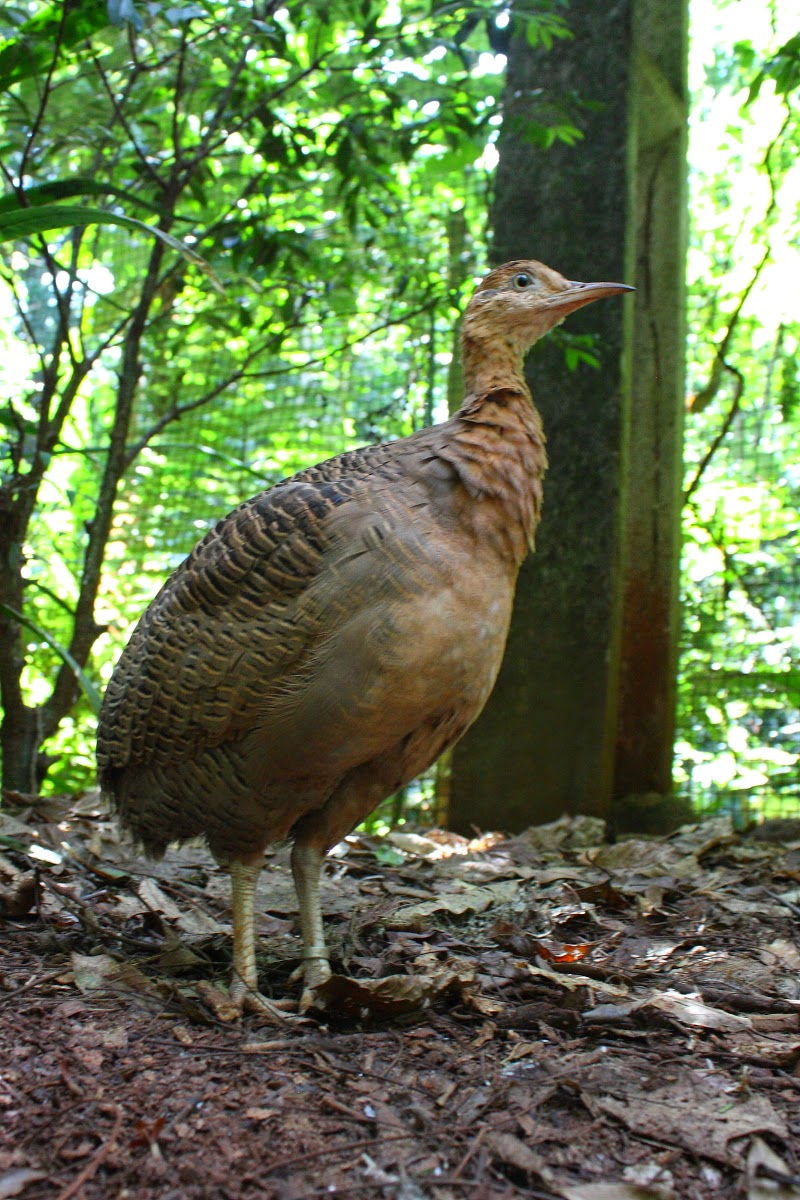
Female Golden Pheasant?


Cool hair do dude!


Spoon-billed Ibis


The very impressive Harpy Eagle, the largest and most powerful raptor in the Americas


The fun and quirky Hyacinth Macaw.
They reminded us of Dory from Finding Nemo.


Story time! 
These guys sat like this for ages. 


These 2 Macaws were very lovey with each other, was very sweet.


Shake those tail feathers! 


Before we jetted home on Monday, we had time to squeeze in a tour of the Itaipu Dam and hydroelectric scheme. For this project, Brazil and Paraguay both donated land and Itaipu Binacional was created: a neutral company that runs the project on neutral land. A dam was built on the Paraná River to harness the natural power of the water and 20 generators were installed. The treaty between Brazil and Paraguay was signed in 1973 and construction began in 1975. The first generator started in 1984 and the last were operational in 1991.

We joined the special tour of the Itaipu project which took us to view the dam and into the heart of the plant where we saw the central control centre and one of the generators in action. We really enjoyed visiting this feat of engineering and some of the fun facts we learnt about the project include:
- The Itaipu spillway supports a flow of water 40 times greater than the average flow of Iguassu Falls.
- The total volume of concrete used to build the plant would be enough to build 210 football stadiums like the Maracanã Stadium in Rio.
- The amount of iron and steel used would be enough to build 380 Eiffel Towers.
That is a lot of water, concrete and steel!


Inside the dam wall 


The Control Centre


Boibs at Itaipu


Overview of the dam and spillway


And then the weekend was over and it was time to go home =(


Sunset in Sao Paulo while boarding the plane 


All in all we had an amazing weekend and can highly recommend a visit to Iguassu!

Back in Vitoria it has ‘cooled down’ to a much more bearable 28°C over the last two weeks, we really hope it stays that way! It is still very dry though and we are hoping for some more rain before the rainy season draws to a close. We are also enjoying lots of public holidays in April with 4 long weekends in a row!  


Until next time x