Sunday, 29 July 2018

Phu Quoc, in the low season

After almost 3 months in Ho Chi Minh City, we decided that it was time to enjoy a long weekend outside of the city.  We investigated a few options, and eventually decided that we would head to Vietnam's largest island, Phu Quoc.  It's a short hop by plane from HCMC to Phu Quoc and there are a number of flights every day.  

Southern Vietnam has two seasons, a wet season and a dry season.  The dry season is typically from November to April, and the wet season covers the rest of the year.  As we were travelling in July, this would be right in the middle of the wet season, and therefore also the low season.  The climate during these seasons is influenced by the monsoons; the winter monsoon from the north-east from November to April, and the summer monsoon from the south-west from May to October.  These monsoons bring the wind, and for Phu Quoc this means that the western side of the island is more exposed to strong winds and large waves during the summer / wet season.  Although we had considered these factors when planning our trip to Phu Quoc, we still ended up staying on the western side.  There are far more accommodation options on the western side, and we found a resort with its own secluded beach that looked like the perfect getaway spot.  


Ong Lang Beach, close to where we were staying


The small secluded beach at Phu Quoc Eco Beach Resort where we were staying


Hammock time :)


Exploring by bike.  This was definitely the best way to get around the area where we were staying.  Get on the bike, find a beach and go for a walk, cycle some more, stop for lunch, cycle some more, and then head back to the hotel for cocktails.  It was a tough weekend :)


Not impressed about having to be the subject of this photo...


Cheesy pizza!


Cafe sua da (Vietnamese iced coffee) is something everybody should try when they visit Vietnam.  Its basically filter coffee with condensed milk and ice.  It might not be the healthiest option, but it is soooo good!  You can find it just about anywhere in Vietnam, but this was the first time I received a 'put-it-together-yourself' version.     


And did we mention the coconuts?  They are huge, and fresh, and oh so good! 


Some photos taken around the resort where we were staying. 


From the moment we arrived until when we left, there was the constant sound of frogs croaking.  We loved it!


And we also saw Tokay geckos.  These guys can apparently grow to 35cm long.  The ones that we saw were around 20cm, and we got to share our accommodation with three of them.  Great for keeping the place mosquito free.


Orchids just seem to thrive here.


Not sure what this plant is, but it had some photo worthy flowers.


Some seaside graffiti. 


Earlier in the blog I mentioned that the wet season in Southern Vietnam comes with the south-west monsoon.  Unfortunately this constant wind from the south-west also brings with it lots of floating rubbish and debris that has been accumulating in the Gulf of Thailand.  The result is lots of rubbish washing up on Phu Quoc's south-west facing beaches.  I can imagine that trying to keep these beaches clean during the low season is a huge challenge, and the solution that seems to have been adopted is to rather wait until after the summer monsoon season is over.  So, unfortunately, the western side of the island during low season is not the place or time to find clean beaches.  Although we haven't been to Phu Quoc during the high season, I believe that the beaches are generally in a far better state during this time of year.  But, the low season does mean that you can enjoy a cheaper and less crowded version of Phu Quoc.  And while the beaches might not be pristine and the large waves might be a deterrent for entering the sea, there is always the resort swimming pool.  All-in-all, we thoroughly enjoyed our low season getaway, and would be interested to see how it compares with a high season experience. 

Monday, 30 April 2018

Vietnam: Cu Chi Tunnels

After two weeks in Saigon*, and our time mostly having been preoccupied with work and finding an apartment, we finally had some time to feel like tourists.  The 30th of April is Reunification / Liberation Day in Vietnam.  It is a national holiday to mark the end of the Vietnam War (or American War as it is known in Vietnam) which officially ended on 30 April 1975 when Viet Cong and North Vietnamese troops captured Saigon.  The war had started in November 1955 and had lasted almost 20 years.  The Cu Chi tunnels had played an important role during the conflict as they provided an underground network for the Viet Cong to hide in.  

The total length of the Cu Chi tunnels is apparently over 200 km.  It included tunnels that were close to the surface and which were used mainly during combat. It also included deeper tunnels, that were less likely to be destroyed by bombs, that were used as short-term living spaces, storage spaces, hospitals, etc.  

Seeing as 30 April is Reunification / Liberation Day, it also seemed like a good day to visit the tunnels.  


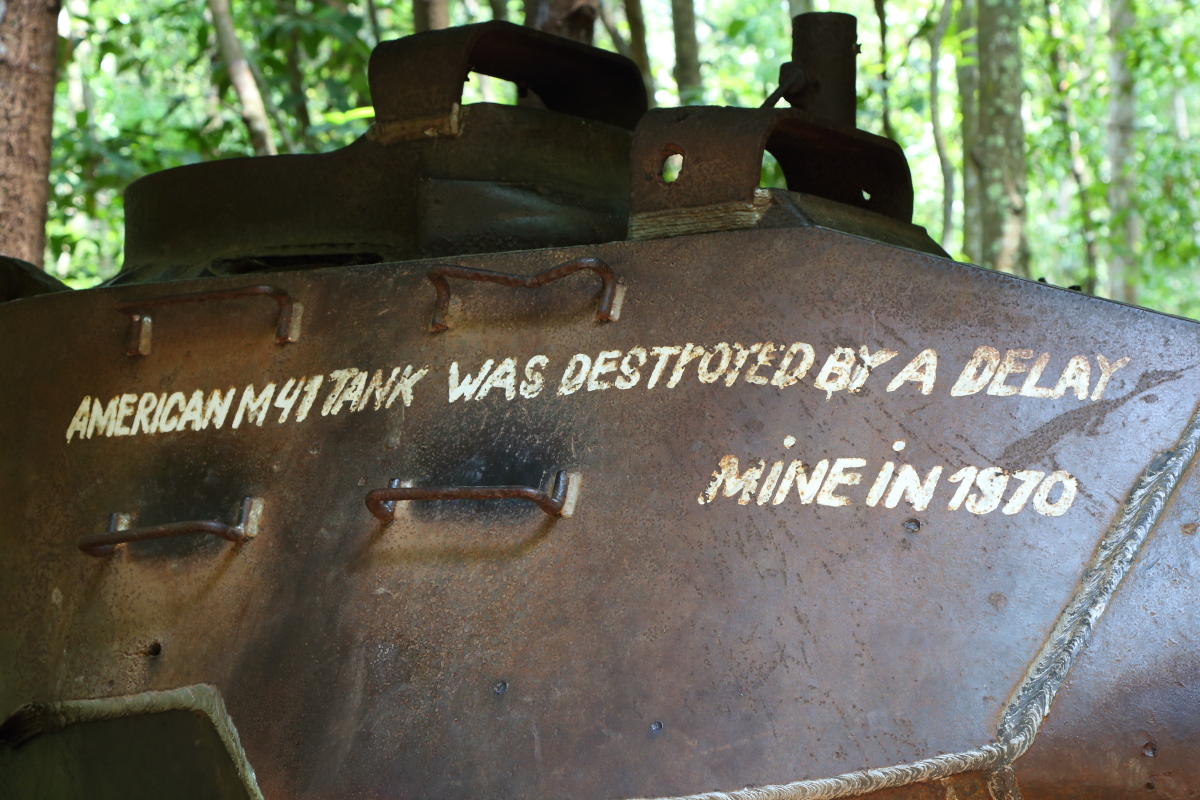
One of the American tanks that was destroyed during the war is on show at the tunnels


Our guide, Ken, explaining how the Viet Cong had set traps throughout the area (above)
and various types of traps on display (below)


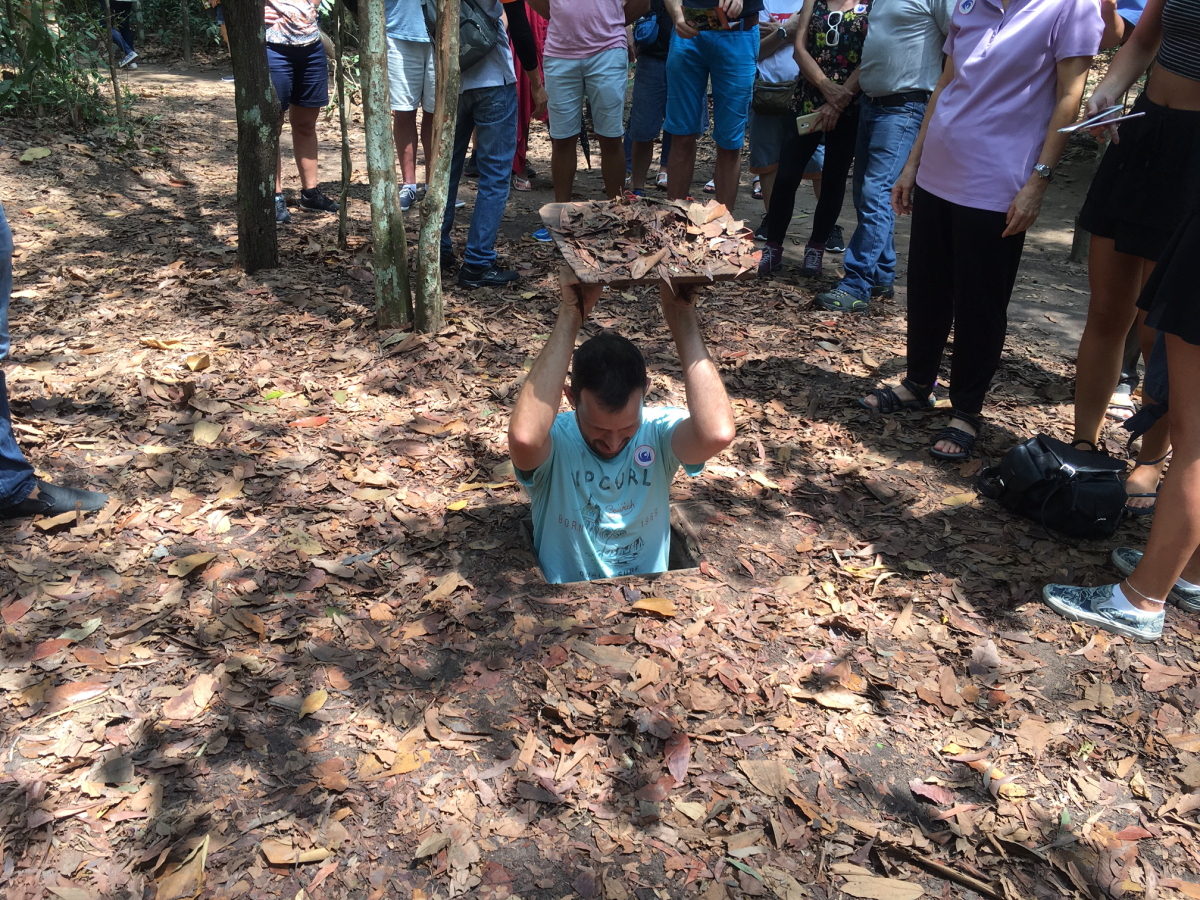
The holes that were used to access the tunnel system were extremely small, and once the cover was put in place it was almost impossible to find the tunnel access routes.  Apparently the Viet Cong did not draw maps of the area or the access points, but rather relied on memory.  


As small as the hole was that we climbed into, this was in fact not the actual size of the tunnel access holes.  This hole had been increased in size to accommodate European tourists.  The photo below shows the actual size of the holes that were used to access the tunnels. 


Below:  This hole is used to show how small some of the tunnels were.  The tunnels, which lead off from the bottom of this hole, are so small that you could only get through them on your stomach. Oh, and watch out for the bats which have since made these tunnels home.  


It was then time to access one of the tunnels.  The tunnels are now clearly marked and protected from the rain, but this wouldn't have been the case during the war.  Once again, the tunnel that we accessed had been increased in size to accommodate tourists.  Instead of 1m high and 1m wide, these tunnels had been increased in size so that they were now 1.4m high.  


The photo above shows one of the craters that was left behind by a B52 bomb.  Although this area was heavily bombed, there are not as many craters as one might expect to find.  Apparently the earth that was excavated, by hand, to create the tunnels was then used to fill the craters.  This made it less obvious where the tunnels had been built as there were no mounds of soil left lying around.  

And finally, emerging from the ground :)


* Although officially called Ho Chi Minh City, almost everybody here still refers to it as Saigon.

Saturday, 21 April 2018

SA Road Trip: Hermanus and Cape Town

The next stop on our SA road trip was the Western Cape.  Our time was spread between Cape Town, still one of our favourite cities in the world, and Hermanus.  

It was great catching up with friends and family, but as usual we just didn't have enough time to see everybody and could easily have spent another 2 weeks here.  

Some of the highlights of our time here included:
- a trip up Table Mountain for Bronwen's birthday - free for South African citizens on their birthday :)
- picnic in Kirstenbosch.  Perhaps we are biased, but there does not seem to be another botanic garden anywhere in the world that competes with the beauty of these gardens.
- meeting Isla and Nathan.  Our nephew and niece were born in the time since our last visit, and meeting them was extremely special.
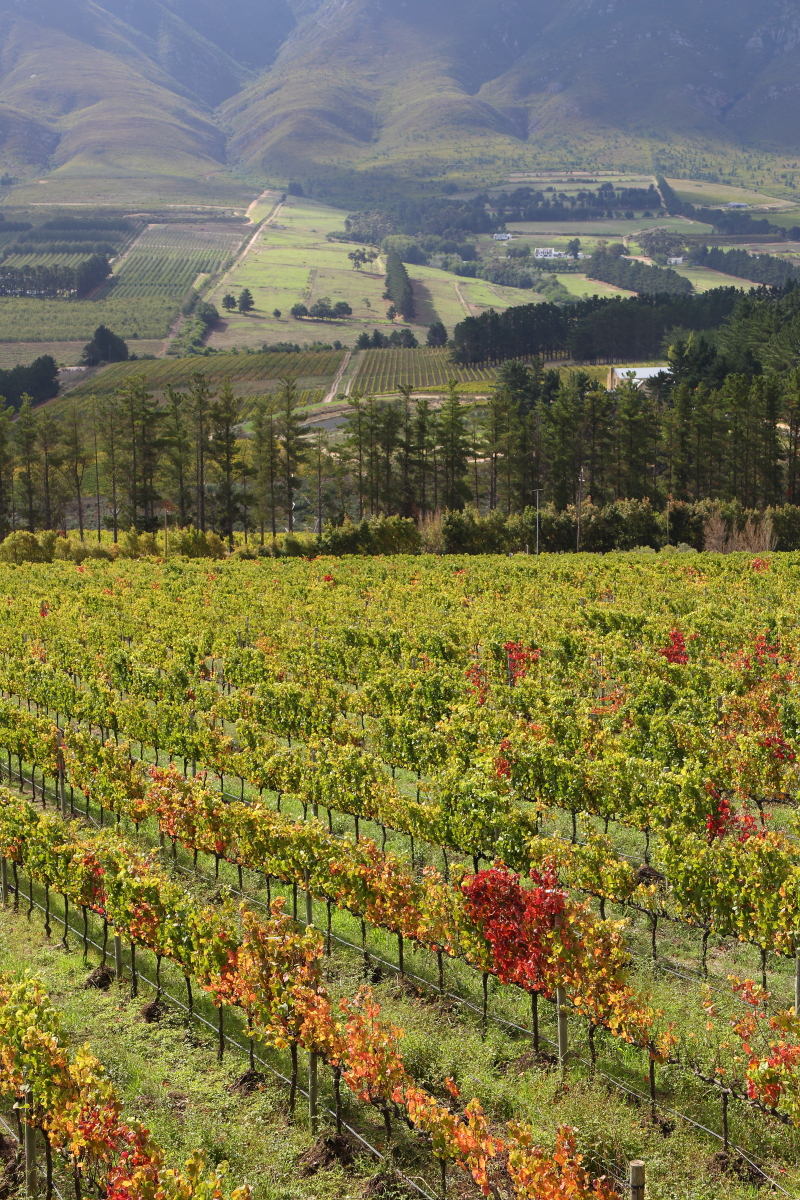
- exploring the beautiful surroundings of Hermanus, and especially the nearby Hemel-en-Aarde valley.

Table Mountain


Kirstenbosch 


Hermanus


Hemel-en-Aarde Valley